STMicroelectronics provides a recommended PCB layout in the application note AN2352, which includes guidelines for component placement, routing, and grounding to minimize EMI and ensure reliable operation.
The TS488IST can be configured for I2C or SPI communication by setting the appropriate pins (e.g., SCL/SDA for I2C or SCK/MOSI/MISO for SPI) and using the correct protocol-specific commands. Refer to the datasheet and application notes for detailed configuration and protocol information.
The maximum operating frequency of the TS488IST is 50 MHz. As the operating frequency increases, power consumption also increases. However, the TS488IST has a low-power mode that can be enabled to reduce power consumption when the device is not actively transmitting or receiving data.
The TS488IST provides error detection and correction mechanisms, such as parity and checksum, to ensure data integrity. In case of errors, the device can be configured to generate interrupts or flags to notify the system. The application software should implement error handling routines to recover from errors and exceptions.
The TS488IST is rated for operation in a temperature range of -40°C to 125°C and humidity up to 60%. However, it's essential to follow proper PCB design and assembly guidelines, as well as provide adequate thermal management and protection, to ensure reliable operation in harsh environmental conditions.
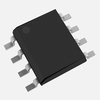 TS488IST datasheet
by STMicroelectronics
TS488IST datasheet
by STMicroelectronics

