A good PCB layout for optimal thermal performance involves placing the device near a thermal pad or a heat sink, and ensuring good thermal conductivity between the device and the heat sink. A 2-layer or 4-layer PCB with a solid ground plane is recommended. Avoid placing thermal vias under the device, and ensure that the PCB is designed to minimize thermal resistance.
To ensure reliable operation at high temperatures, ensure that the device is operated within the recommended temperature range (up to 150°C for the STPS5H100B-TR). Use a heat sink or thermal pad to dissipate heat, and ensure good airflow around the device. Avoid overheating, which can cause permanent damage to the device.
When handling the STPS5H100B-TR, take precautions to prevent electrostatic discharge (ESD) damage. Use an ESD wrist strap or mat, and handle the device by the body or pins, not the leads. Avoid touching the device's pins or leads, and store the device in an anti-static bag or container.
To calculate the power dissipation of the STPS5H100B-TR, use the formula: Pd = (Vin - Vout) x Iout, where Pd is the power dissipation, Vin is the input voltage, Vout is the output voltage, and Iout is the output current. Ensure that the calculated power dissipation is within the device's recommended maximum power dissipation rating.
The recommended input and output capacitors for the STPS5H100B-TR are ceramic capacitors with a voltage rating of at least 2x the input voltage. A 10uF to 22uF input capacitor and a 10uF to 47uF output capacitor are recommended. Ensure that the capacitors are placed close to the device and have low ESR (Equivalent Series Resistance) for optimal performance.
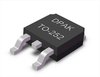 STPS5H100B-TR datasheet
by STMicroelectronics
STPS5H100B-TR datasheet
by STMicroelectronics


