A good PCB layout for the LT1790 involves keeping the input and output traces short and away from each other, using a solid ground plane, and placing bypass capacitors close to the device. A 4-layer PCB with a dedicated ground plane is recommended.
To ensure accuracy, use a high-accuracy external resistor divider network, keep the input voltage within the recommended range, and minimize noise and thermal effects on the device. Also, consider using a voltage reference with a low temperature coefficient.
The maximum power dissipation of the LT1790 is dependent on the package type and thermal environment. For the ACS6 package, the maximum power dissipation is approximately 1.4W. However, it's recommended to keep the power dissipation below 1W to ensure reliable operation.
While the LT1790 can be used as a voltage regulator, it's not recommended due to its limited current capability (up to 20mA) and lack of short-circuit protection. Instead, consider using a dedicated voltage regulator IC designed for the specific application.
To minimize noise sensitivity, use a low-noise input voltage source, add bypass capacitors to the input and output pins, and keep the device away from high-frequency noise sources. Also, consider using a noise-reducing capacitor on the output pin.
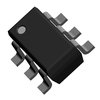 LT1790ACS6-2.048#TRMPBF datasheet
by Linear Technology
LT1790ACS6-2.048#TRMPBF datasheet
by Linear Technology
