The maximum safe operating area (SOA) for the IRF840 is not explicitly stated in the datasheet. However, STMicroelectronics provides a SOA curve in the application note AN440, which shows the maximum allowable drain-source voltage and current combinations for the device.
To ensure the IRF840 is fully turned on, the gate-source voltage (Vgs) should be at least 10V, and the gate drive voltage should be able to supply sufficient current to charge the gate capacitance quickly. A gate resistor (Rg) of around 10-20 ohms is recommended to limit the gate current.
The maximum junction temperature (Tj) for the IRF840 is 175°C. However, it's recommended to keep the junction temperature below 150°C for reliable operation and to prevent thermal runaway.
Yes, the IRF840 can be used in high-frequency switching applications, but it's essential to consider the device's switching characteristics, such as the rise and fall times, and the gate charge. The IRF840 has a relatively high gate charge, which may limit its suitability for very high-frequency applications.
To protect the IRF840 from electrostatic discharge (ESD), it's recommended to handle the device with an anti-static wrist strap or mat, and to use ESD-protected workstations and tools. Additionally, the device should be stored in an anti-static package or bag when not in use.
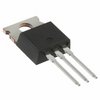 IRF840 datasheet
by STMicroelectronics
IRF840 datasheet
by STMicroelectronics


