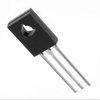
The maximum safe operating area (SOA) for the BD135 is not explicitly stated in the datasheet, but it can be estimated based on the device's thermal resistance and maximum junction temperature. As a general rule, it's recommended to keep the device within the specified absolute maximum ratings to ensure reliable operation.
To ensure the BD135 is properly biased for linear operation, you should ensure that the base-emitter voltage (VBE) is within the recommended range (typically around 0.6-0.7V) and that the collector-emitter voltage (VCE) is sufficient to maintain a linear operating region. You can use a voltage divider or a current source to set the base voltage and current, respectively.
For optimal thermal management, it's recommended to use a heat sink or a thermal pad on the BD135, especially in high-power applications. A good PCB layout should also ensure minimal thermal resistance between the device and the heat sink. Additionally, keep the device away from other heat sources and ensure good airflow around the device.
Yes, the BD135 can be used as a switch, but it's essential to consider the device's switching characteristics, such as the turn-on and turn-off times, and the base-emitter voltage required for saturation. You should also ensure that the device is properly biased and that the collector-emitter voltage is sufficient to maintain a low saturation voltage.
To protect the BD135 from electrostatic discharge (ESD), it's recommended to use ESD protection devices, such as TVS diodes or ESD protection arrays, in parallel with the device. You should also follow proper handling and storage procedures to minimize the risk of ESD damage.