The maximum frequency of the clock signal that can be applied to the 74HC595DB is 25 MHz, according to the datasheet. However, it's recommended to derate this frequency based on the capacitive load and the operating voltage.
To ensure that the outputs are in a high-impedance state during power-up, you can connect the OE (Output Enable) pin to VCC through a pull-up resistor. This will keep the outputs in a high-impedance state until the OE pin is actively driven low.
Yes, the 74HC595DB can be used as a level shifter. Since it's a CMOS device, it can operate with a wide range of supply voltages (2.0 V to 6.0 V). You can use it to shift signals from a lower voltage domain to a higher voltage domain, or vice versa.
According to the datasheet, each output pin can source or sink up to 25 mA. However, it's recommended to limit the current to 10 mA or less to ensure reliable operation and to prevent overheating.
During power-up, it's recommended to keep the SRCLR pin high for at least 10 ns to ensure that the internal flip-flops are properly reset. You can connect the SRCLR pin to VCC through a pull-up resistor or drive it high using an external signal.
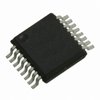 74HC595DB datasheet
by NXP Semiconductors
74HC595DB datasheet
by NXP Semiconductors


