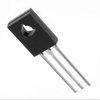
The maximum SOA for the 2SB772 is not explicitly stated in the datasheet, but it can be estimated based on the transistor's thermal resistance and maximum junction temperature. As a general rule, it's recommended to keep the transistor within the SOA to prevent thermal runaway and ensure reliable operation.
To ensure linear operation, the 2SB772 should be biased in the active region, where the base-emitter voltage (VBE) is around 0.7V and the collector-emitter voltage (VCE) is greater than 1V. The base current should be limited to prevent saturation, and the collector current should be within the recommended range.
For optimal thermal performance, it's recommended to use a PCB with a large copper area for heat dissipation. The transistor should be mounted on a heat sink or a thermal pad, and the PCB should have adequate clearance around the transistor to prevent thermal coupling. A thermal interface material (TIM) can be used to improve heat transfer between the transistor and the heat sink.
To protect the 2SB772 from ESD, it's recommended to use ESD protection devices such as TVS diodes or ESD protection arrays on the input and output pins. Additionally, handling precautions such as using an anti-static wrist strap, mat, or workstation can help prevent ESD damage.
The 2SB772 should be stored in a dry, cool place, away from direct sunlight and moisture. The transistor should be handled with care to prevent mechanical damage, and it's recommended to use anti-static packaging and handling materials to prevent ESD damage.